发布时间:2026-01-05
Folks who often attend consumer electronics launch events may hear hosts mention products achieving IPX7 or IPX8 waterproof ratings. At first glance, it might seem like a simple understanding that higher numbers mean better waterproof performance. But have you ever wondered what exactly these numbers signify? This article will take you deeper into the world of IP ratings.
Actually, this IP rating does not only refer to waterproof rating, but also to "shell protection rating". IP stands for Ingress Protection, which means' entry protection '.
According to the definition of the national standard GB/T4208-2017, the definition of IP code is a code system that indicates the protection level of the enclosure against human access to dangerous parts, prevention of solid foreign objects or water ingress, and provides additional information related to these protections.
According to this definition, the meaning of IP code is not limited to dust and water resistance levels, but also includes protection against people approaching dangerous parts, as well as other related additional information.
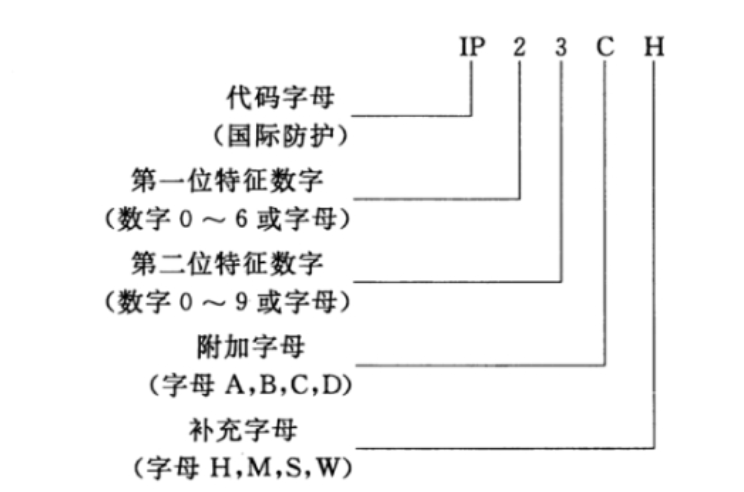
Figure 1 Format of IP Code [1]
As shown in Figure 1, the IP code starts with the letter IP, representing International Protection/Ingress Protection. There are two interpretations, and the national standard uses the meaning of "International Protection". The IP letter is followed by two characteristic numbers to indicate the level of protection. Following the numbers are additional letters and supplementary letters, representing the protection level and testing conditions for hazardous components, respectively.
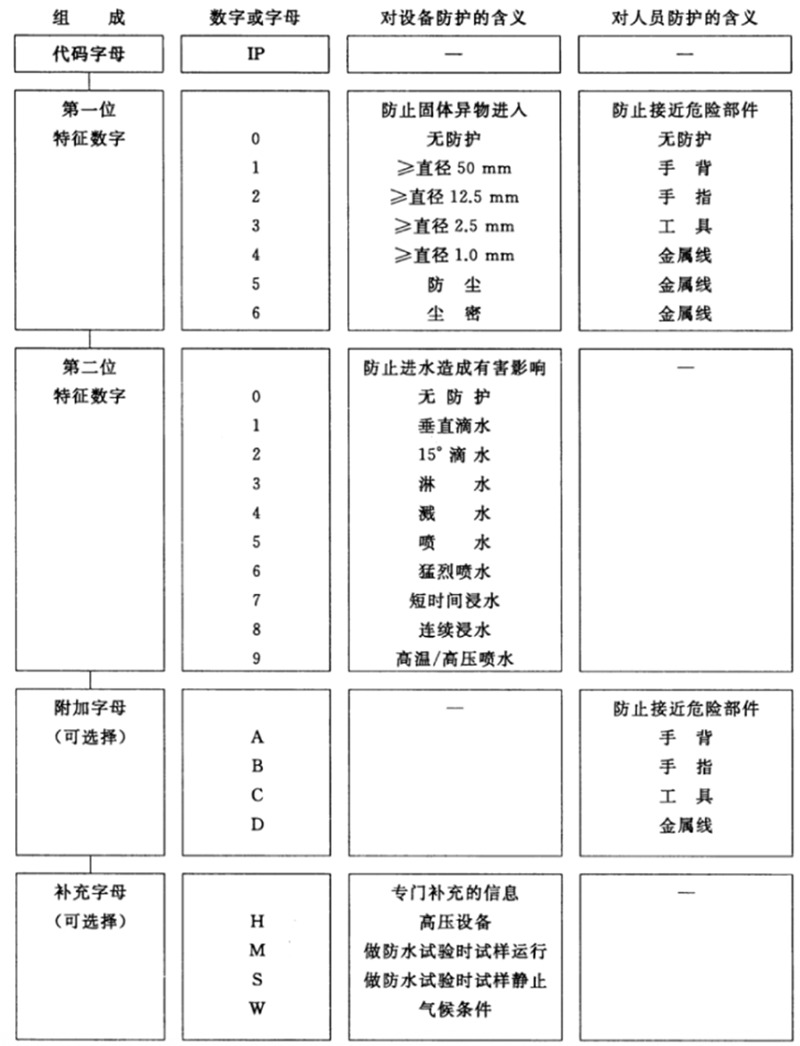
Figure 2: Elements and meanings of IP codes [1]
Figure 2 provides a detailed explanation of the meanings of characteristic numbers, additional letters, and supplementary letters.
The first characteristic number represents the level of protection against solid foreign object intrusion, as well as the level of protection against external personnel, tools, etc. of hazardous components of the equipment, which is divided into 0-6 levels. This number contains two levels of meaning, one is for equipment protection and the other is for personnel protection. For example, IP23 represents the casing of the device: (1) it can prevent foreign objects with a diameter greater than 12.5mm from entering; (2) It can prevent fingers from reaching a certain depth. When the level reaches 5, the equipment has dust-proof capability. Although it cannot completely prevent dust from entering, the amount of entry does not affect the normal operation of the equipment. Reaching level 6 completely isolates dust from entering.
The second characteristic number represents the waterproof level, which is divided into 0-9 levels. The 9th level is a new level added in the 2017 version of the national standard, indicating protection against high temperature and high pressure water spray.
The characteristic numbers should be omitted and replaced with the letter X to indicate that no requirements or tests have been conducted. For example, IPX7 only indicates the waterproof level and does not specify the level of protection against solid foreign objects.
Additional letters (optional) represent the protection level for approaching hazardous components, divided into four levels: ABCD (Figure 3). At first glance, it may seem to conflict with the first feature number, but in fact, the two are complementary to each other. The first characteristic number focuses on the shell's ability to prevent hands, tools, etc. from entering (anti entry), while the additional letters focus on preventing contact with dangerous components (anti touch). For example, IPXXB indicates that the device does not specify the level of foreign object and water resistance, but can protect fingers from touching dangerous parts.
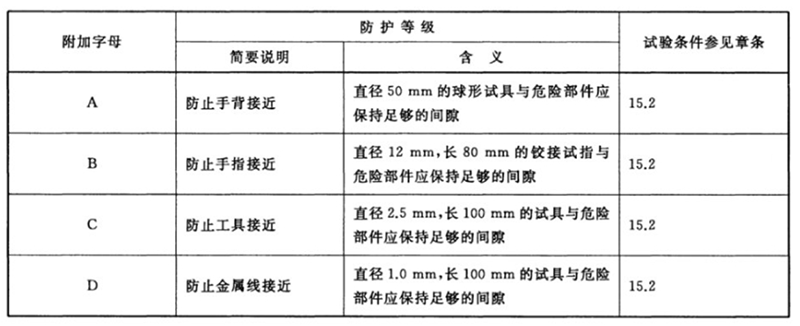
The protection level of hazardous components indicated by the additional letters in Figure 3 [1]
Supplementary letters (optional) represent the testing conditions for the previous protection level (Figure 4).
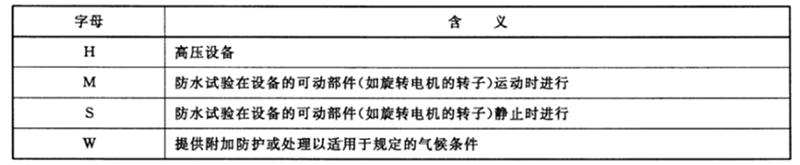
Figure 4: Meaning of Supplementary Letters [1]
Additional letters and supplementary letters can be omitted and do not need to be replaced.
Therefore, the IP code may have the following configurations:
IP68, IPX6, IP5X, IPXXB, IP68BM, IP68M, and so on.
However, it is worth noting that from the definition of the first characteristic number, a certain level of protection clearly meets the requirements of levels lower than that level and can be compatible downwards.
However, the second feature number is not simply backward compatible. When the second feature number is 6 and levels below 6, their identified levels also indicate compliance with the requirements of levels below that level, and can be compatible downwards (for example, IP5 also meets the requirements of IP0-4 levels).
However, because the testing conditions for levels 7, 8, and 9 are not the same, backward compatibility is not supported (according to the national standard, IPX8 can cover the requirements of IPX7), only indicating that the device meets the waterproof performance under the testing conditions. Therefore, everyone should note that the IPX8 waterproof rating does not automatically indicate compliance with IPX6 or IPX5, but only represents compliance with IPX8 waterproof testing. If multiple waterproof conditions are required, multiple labels are needed, such as IPX6/IPX8, IPX5/IPX7/IPX9, etc.
Considering that people are often concerned about waterproof performance, we will further discuss the meaning of waterproof grade. Table 1 provides a detailed explanation of the meaning of the second characteristic number (waterproof level). You can refer to Table 1 and evaluate the waterproof level requirements of your device based on its working environment.
Explanation of the meaning of the second characteristic number (waterproof grade) in Table 1
level |
Brief description |
Meaning |
Real-world scenario |
0 |
Without protection |
Without protection |
Cannot come into contact with water, such as circuit boards |
1 |
Prevent vertical water droplets |
Vertical dripping has no impact |
The environment with roof leakage/condensation dripping can be used. Vertical installation is required. |
2 |
Prevent vertical dripping of water when tilted at 15 ° |
Tilting water droplets at 15 ° has no effect |
The environment with roof leakage/condensation dripping can be used. Installation can have a 15 ° tilt. |
3 |
Waterproof water |
Spraying water within a vertical 60 ° range has no effect |
Prevent "light rain" or "splashing rainwater". The device is placed on the windowsill to prevent raindrops from drifting in during light rain outside. |
4 |
Splash-proof |
Spraying water in any direction has no effect |
Prevent splashing water. For example, being splashed with water while washing hands, or being dripped with sweat while exercising. |
5 |
Anti spray water |
Spraying water in any direction has no effect |
Prevent "showerhead water dripping" or "strong rainwater". Can withstand direct showerhead flushing, or riding or walking in moderate rain. |
6 |
Prevent strong water spray |
Strong water spray in any direction has no impact |
Rainstorm proof or strong water jet cleaning. |
7 |
Prevent short-term immersion in water |
Short term immersion has no impact |
Prevent accidental drowning or short-term immersion in water. |
8 |
Prevent continuous immersion in water |
Long term immersion in water has no effect |
Can be submerged in water for a long time. |
9 |
Prevent high temperature/high pressure water spray |
High temperature and high pressure water injection has no effect |
Prevent high-pressure hot water flushing. For example, flushing equipment with high-temperature hot water. |
Here are a few examples to deepen our understanding.
Example 1. Identification: IP24.
(2) - Prevent fingers from approaching dangerous parts;
- Prevent solid foreign objects with a diameter of not less than 12.5mm from entering the casing.
(4) - Prevent harmful effects on equipment caused by splashing water in all directions of the casing.
Example 2. Identification: IP23CS
(2) - Prevent people from approaching dangerous steps with their fingers;
- Prevent solid foreign objects with a diameter of not less than 12.5mm from entering the casing.
(3) Prevent water from causing harmful effects on equipment.
(C) - Prevent people from holding tools with a diameter of not less than 2.5mm and a length of not more than 100mm near dangerous parts.
(S) The waterproof test is conducted when the equipment is stationary.
Example 3. Identification: IPX8M
(X) No requirements are made for the entry of solid foreign objects.
(8) - Prevent continuous immersion in water from causing harmful effects on equipment.
(M) Waterproof testing is conducted during equipment operation.
The format of IP codes and their underlying meanings were discussed in depth in the previous text. I believe everyone has gained a deeper understanding of protection levels and more useful knowledge! In the future, you can also make your own decisions on the selection of equipment protection levels. If you are interested in testing methods and other details, you can send a PDF document of the national standard GB/T4208-2017 to the editor via private message. If you have any ideas or questions, please feel free to discuss them in the comment section.
Reference: National standard GB/T 4208-2017 "Degrees of Protection Provided by Enclosures (IP Code)"
Original statement: This article is the original content of Jindi Electric. Please indicate the source when reprinting. Thank you!
Dongguan Jindi Motor Co., Ltd

Golden Motor The quality of gold
Golden Motor Golden Quality